O|Zone™ -International
A Global Initiative
A Network of Connected Regional Systems
O|Zone™ International extends the Port Authority Opportunity Zone (PAOZ) and Port Authority frameworks described below beyond national boundaries by establishing a network of connected regional systems. Each participating country develops its own multi-jurisdictional regions—aligned with local law, governance, and economic priorities—while connecting those regions into a broader international framework.
At the regional level, PAOZs and their corresponding Port Authorities coordinate infrastructure, development, and economic activity within defined geographies. At the international level, these regional systems are linked, enabling direct interaction between regions in different countries, as well as alignment between regions within the same country. What emerges is a system where regions can engage with one another as coordinated economic environments rather than as isolated markets.
This connectivity allows for practical, real-world alignment across industries and resources. Agricultural production in one region can connect with processing and distribution capabilities in another. Manufacturing capacity can align with specialized inputs or downstream markets across borders. Healthcare, education, and other service-based initiatives can extend beyond their local footprint and operate across multiple regions where there is demand. Initiatives such as AgriCommunity™ provide a structured framework for these interactions, enabling localized production to participate in a broader international supply and value network.
To support these interactions, O|Zone™ International integrates a coordinated financial and risk management layer. Banking and trade-related activities—including currency exchange, settlement, and structured payment flows—are facilitated through Initiatives such as NodeBridge™, enabling regions to transact with one another using consistent and reliable mechanisms. At the same time, risk participation, insurance, and contractual assurance are supported through Insygne-based frameworks, allowing parties to engage in cross-border activity with defined protections, performance support, and confidence in execution.
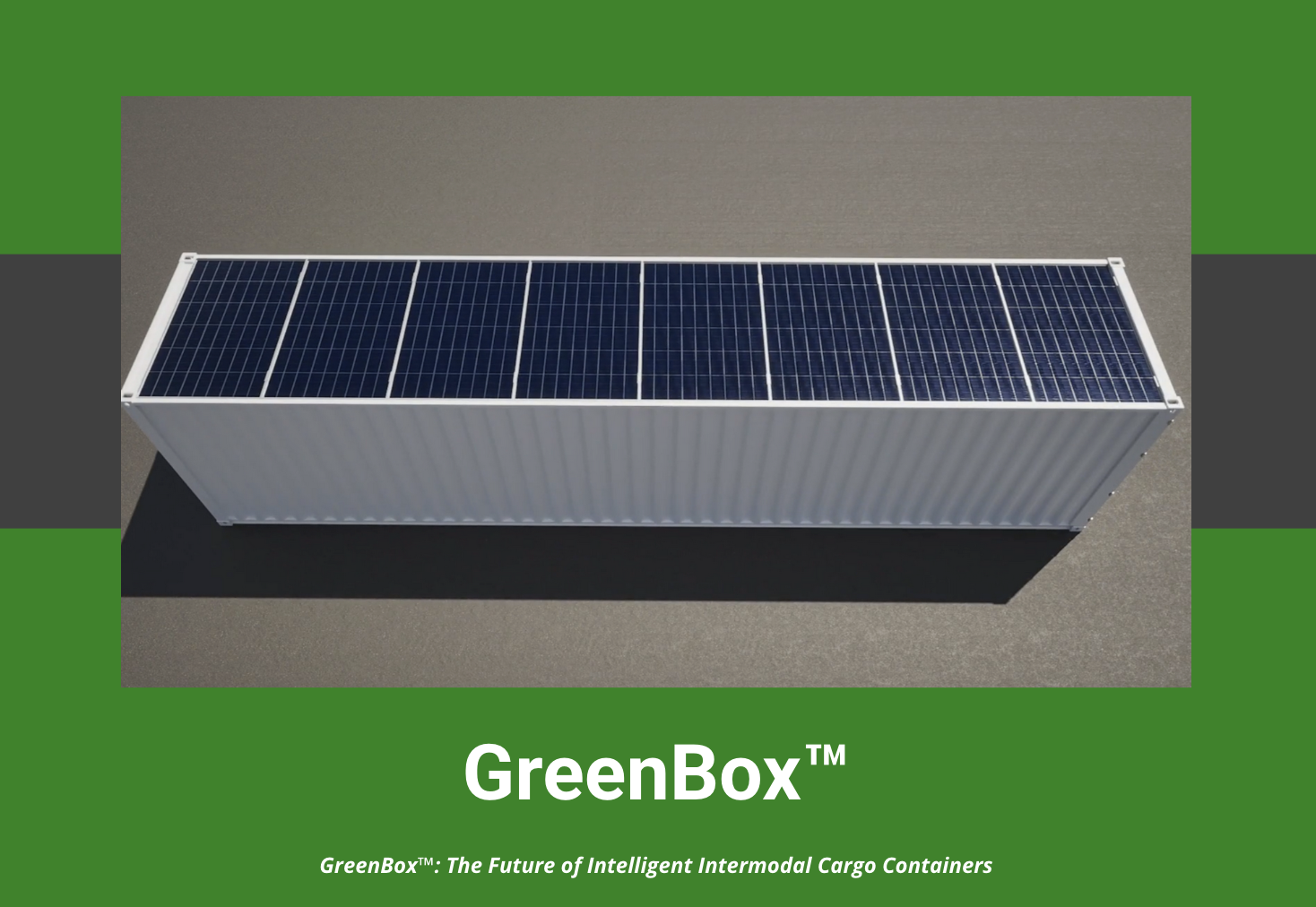
Logistics and the movement of goods are addressed through both physical and digital coordination. Traditional shipping and transport systems are complemented by containerized and modular infrastructure, including GreenBox™ environments capable of operating across international shipping lanes, port facilities, and inland logistics corridors.
These systems provide continuity between regions, enabling not only the movement of goods, but also the deployment of infrastructure and operational capability across borders.
Overlaying these physical and financial systems is a digital coordination framework that enables regions to identify opportunities, align resources, and structure participation across the network. Advanced optimization and decision-support capabilities, supported through platforms such as BAHII, allow participants to analyze, coordinate, and enhance interactions across multiple regions and initiatives. This creates a dynamic environment where activity can be continuously refined based on data, performance, and evolving conditions.
All of these elements operate within the broader Alliance 3.0 framework, which provides the underlying protocols for coordination between human participants, organizations, and intelligent systems. This ensures that interactions across regions—whether physical, financial, or digital—can occur within a consistent and interoperable structure.
The result is a system in which regional economies are no longer limited to isolated national frameworks. Instead, they become part of a connected global network where goods, services, infrastructure, capital, and capabilities can move with greater fluidity. Each region remains grounded in its own governance and priorities, while gaining access to a broader system that supports collaboration, resilience, and growth.
O|Zone™ International transforms regional development into a coordinated global network—linking regions to regions, enabling cross-border participation, and creating new pathways for trade, infrastructure deployment, and shared economic advancement across a system of connected Opportunity Zones.
O|Zone™ U.S. — Port Authorities and Port Authority Opportunity Zones
The O|Zone™ U.S. framework is built on the idea that counties can retain their independence while participating in a larger, coordinated economic system.
Through the formation of Port Authority Opportunity Zones (PAOZs), neighboring counties align to create multi-county environments where infrastructure, enterprise, and community development can move with continuity rather than stopping at jurisdictional boundaries.
Each PAOZ establishes a shared regional field in which Opportunity Sites—ranging from healthcare and education environments to production, hospitality, and mixed-use developments—can emerge and evolve. These sites are not isolated projects, but interconnected environments that may span multiple parcels and, in some cases, extend across county lines. They operate within a consistent framework that allows multiple participants to engage, contribute, and grow over time.
Operating across each PAOZ is the O|Zone™ Port Authority, which provides the coordination layer that aligns infrastructure systems, development activity, and capital formation across the region. It ensures that what is built in one county can connect and interact with what is built in another, creating a cohesive system rather than a collection of disconnected efforts. The Port Authority works alongside local government authorities, enabling regional continuity while preserving local control.
To support this structure, the framework draws on established international port and concession models, including those reflected in global practices and multilateral systems such as those advanced through the United Nations. Within this approach, infrastructure is coordinated at a system level, while operational roles are carried out by a range of participating entities through flexible concession arrangements. These roles evolve over time, allowing each Opportunity Site and each region to adapt to its specific needs.
As additional PAOZs are established across the United States, a new layer of connectivity begins to emerge. Port Authorities are able to align with one another across regions, creating pathways for collaboration, shared infrastructure initiatives, and coordinated economic activity between different parts of the country. What begins as a series of regional systems evolves into a broader national network, where counties and regions can engage not only within their immediate geography, but with other aligned regions across the country.
Beneath this structure is a digital coordination layer that enables participation, alignment, and interaction across these regions. While the physical system is grounded in counties, sites, and infrastructure, the underlying framework allows these elements to connect, interact, and scale as part of a larger, unified system.
The result is a model in which local development, regional coordination, and national connectivity are seamlessly integrated—allowing economic activity to remain rooted in place while participating in a much broader network of opportunity.
Port Authority Links
O|Zone™ is where Opportunity Sites, infrastructure, and participants come together as operating systems—forming integrated environments that can scale across counties and connect beyond them.
Step inside to see how these environments are built, aligned, and deployed in practice. Just press the image link.
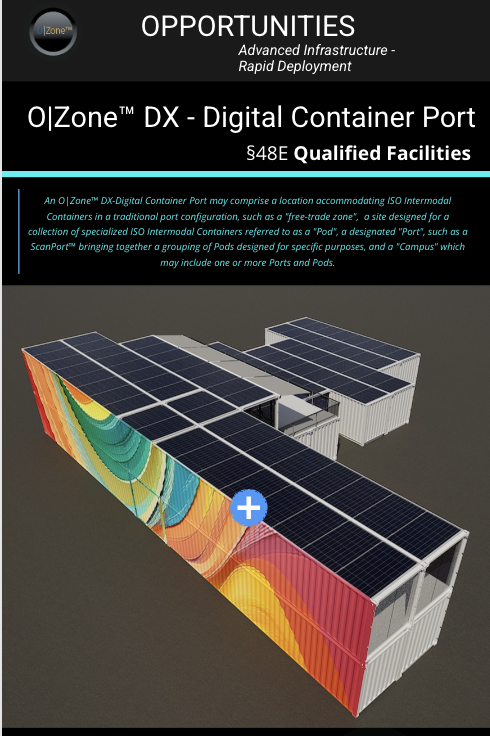
DX-Digital Container Port™ is a modular infrastructure framework designed to transform standardized ISO containers, Pods, Ports, and Campus environments into interconnected operational ecosystems.
Utilizing GreenBox™ containers, GreenPad™ horizontal infrastructure systems, Thermal Utility Engines™ (TUEs), advanced communications networks, and Digital Twin™ enabled technologies, the framework supports the deployment of healthcare, research, utility, logistics, communications, education, public-space, and advanced digital infrastructure initiatives.
The platform is designed to allow specialized operational environments to be assembled incrementally, expanded through time, and interconnected through common utility, thermal, communications, and operational infrastructure layers. Individual Pods may function independently or as part of larger Port and Campus configurations, creating flexible deployment models capable of supporting both urban and rural environments.
By combining modular physical infrastructure with advanced digital systems, DX-Digital Container Port™ provides a foundation for resilient, adaptive, and scalable operational ecosystems designed to support long-duration community development, infrastructure modernization, and next-generation digital transformation initiatives. Press image link!

An Innovator's Guide to the detailed architecture of O|Zone Ecosystems. Just press the image link.
O|Zone™ Organization Links
For expanded information regarding O|Zone™ Federation, press the logo above.
DX - Digital Transformation Link
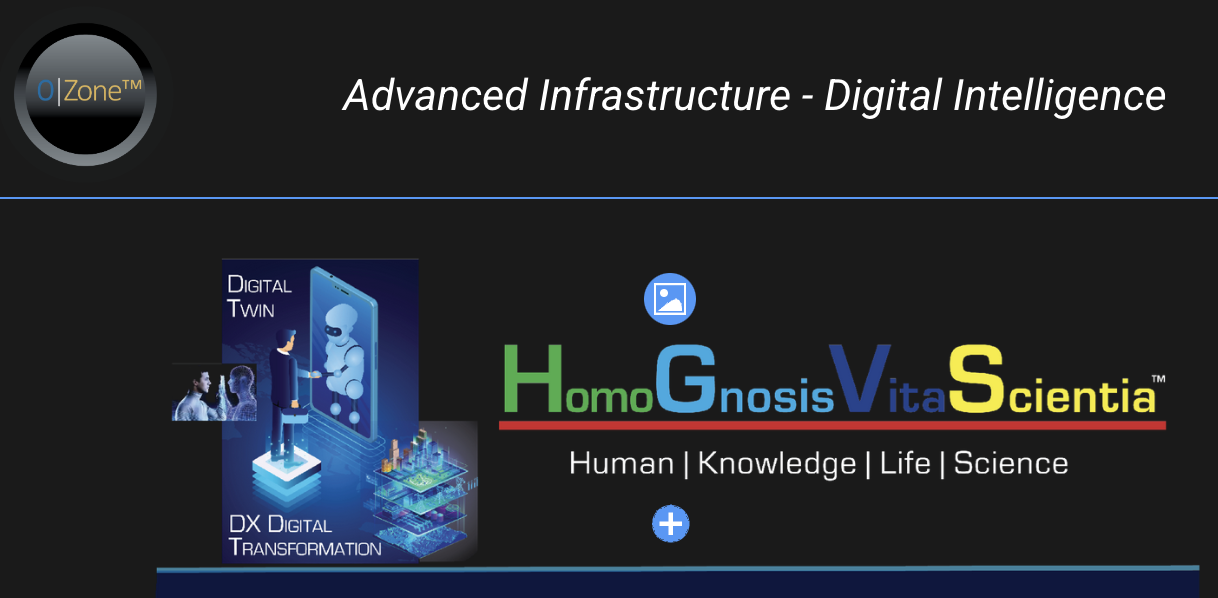
Step inside to see how these technologies are built, aligned, and deployed in practice. Just press the image link.
IIS Container Links
The resources within this library explore how advanced equipment systems, modular infrastructure, Government Incentives, and deployment frameworks may be combined to support healthcare, communications, research, energy, transportation, and other community-serving initiatives.
Together, these resources illustrate how qualifying equipment assets may be used to create scalable infrastructure while reducing net capital costs through available Government Incentives and Self-Directed Incentive Capacity.
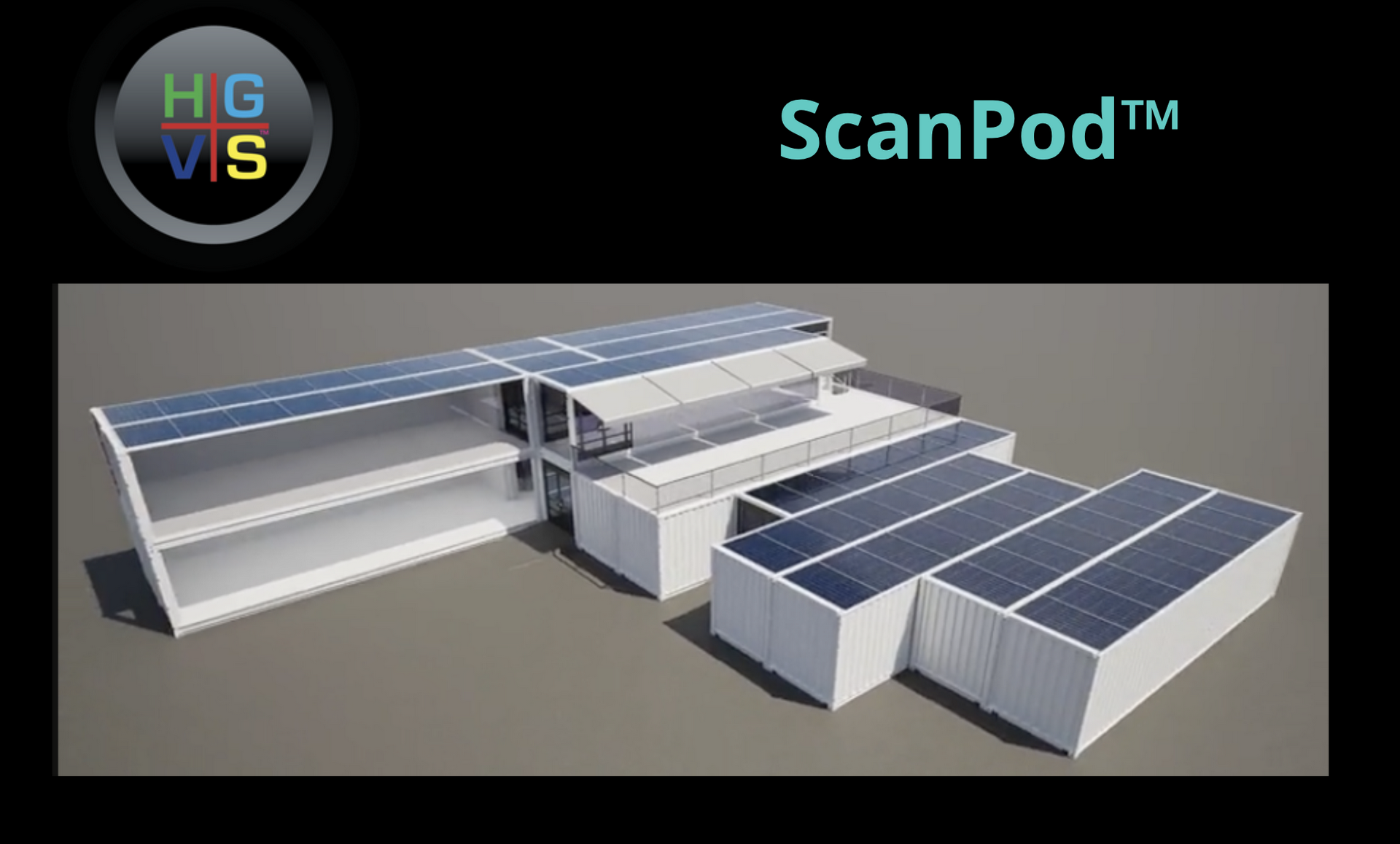
ScanPod™ illustrates how GreenBox™ and companion container systems evolve into purpose-built environments—configured for specialized applications such as advanced imaging and diagnostics.
Within O|Zone™, these pods transform modular infrastructure into precision facilities, deployed at Opportunity Sites to deliver high-value services at the community level.
Step inside to see how container systems become mission-specific environments. Press image link!
O|Zone™ Imagination
O|Zone™ ScanPort
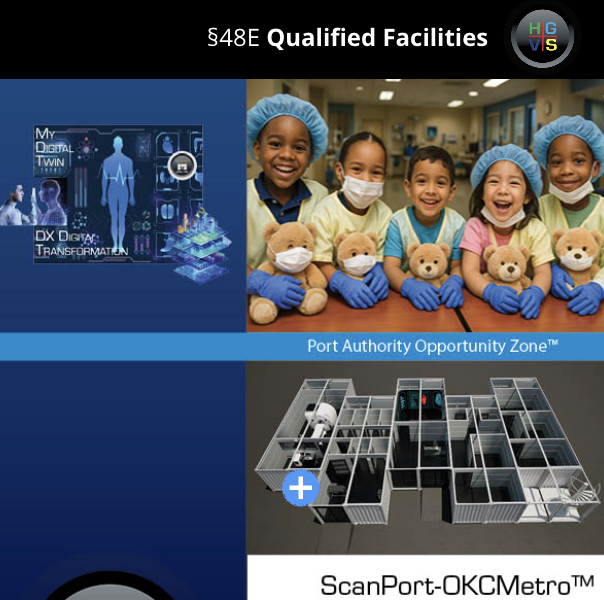
ScanPort™ — An O|Zone™ Project
ScanPort™ represents the next stage in modular infrastructure—where multiple specialized pods are orchestrated into a single, coordinated environment.
Within O|Zone™, these systems function as Digital Container Ports, connecting infrastructure, energy, and intelligence into a scalable platform for advanced services, community integration, and continuous operation.
Explore how individual pods become fully integrated systems. Evolving into an O|Zone™ Project. Press image link!
Members of Alasdair Douglas & Co. and the broader Investors Guaranty framework have, for several decades, been actively involved in identifying, funding, and developing disruptive technologies across a range of industries, including finance, risk, data systems, and infrastructure. These were not passive investments—these technologies were built, deployed, and operated in real-world environments.
Through this process, a consistent challenge became clear.
Despite the innovation, most systems were developed in different ways—using different technologies, different teams, and different approaches. As these systems grew, they became increasingly complex, difficult to integrate, and exposed to operational and cybersecurity risks.
The conclusion was straightforward:
the problem was not the technology—it was the lack of a common, simplified framework for using it.
In response, the focus shifted toward developing a standardized approach. This led to the creation of the Alliance iii.o Protocol, which reduces complex systems to a set of consistent, modular components that can be configured rather than rebuilt.
Within this framework:
Systems are no longer constructed from origin for each new initiative.
Core functions are standardized and repeatable.
Variation is expressed through configuration, not code complexity.
This creates a significant opportunity.
Using the Alliance iii.o framework, new enterprises can be:
Defined and configured to meet a specific objective,
Deployed within a controlled environment, including O|Zone community frameworks,
Tested and refined in real-world conditions, and
Replicated across multiple locations once proven.
Digital Twins play a central role in this process. They provide a means to design, operate, and optimize these enterprises, allowing many routine and operational functions to be executed within the system itself, rather than by large teams.
As a result:
Complexity is reduced at the system level,
Cyber and operational risks are significantly mitigated,
Human effort is redirected toward innovation, configuration, and optimization.
This represents a shift from building and managing complex systems to:
configuring, testing, and scaling outcomes within a unified framework.